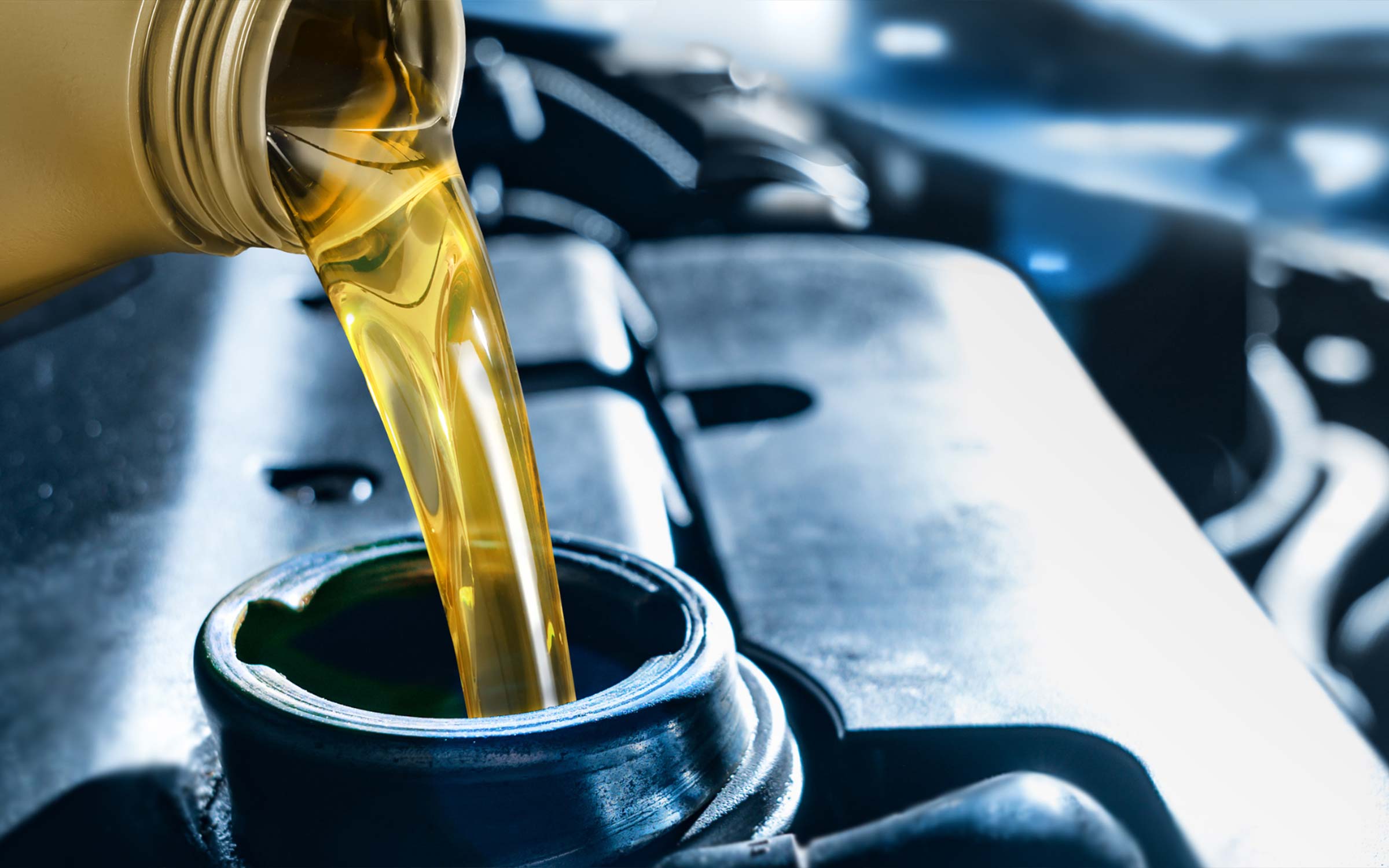
The choice between 5W-30 and 5W-40 is one of the most common maintenance decisions, as it concerns two oil categories used across a very wide range of engines and driving conditions. Confusion usually starts with the idea that “since both are 5W, they are the same,” or that the difference between “30” and “40” is minor. In reality, this difference can significantly change how the lubricating film forms and is maintained at operating temperature, especially when the engine is under load.
It is important to clarify one thing from the start: this is not a comparison between “good” and “better.” It is a comparison between two different protection and performance setups. 5W-30 is often chosen for lower friction losses and improved efficiency, while 5W-40 is often chosen for increased protection margins at high temperature or under heavier load. Which one is correct depends on how the engine actually operates in real-world conditions.
In the guide that follows, you will see with technical accuracy what these designations truly mean, which characteristics really matter (and which do not), and how to make a choice based on engine design, climate, mileage, and driving style — not on generic online rules.
What Viscosity Is and Why It Is Not “Just a Number”
Viscosity is a fluid’s resistance to flow, but in engine oil it is not enough to know whether the oil is “thick” or “thin.” What matters is how it behaves as temperature changes, how it resists mechanical shear, and whether it can maintain a stable lubricating film in critical areas such as crankshaft bearings, camshafts, hydraulic lifters, and, where applicable, turbochargers.
In real operation, oil does not work at a single temperature. There are cold starts, warm-up phases, steady operation, uphill driving, traffic congestion, highway travel, and high-RPM conditions. What truly matters is stability of protection across this entire range of operating scenarios.
That is why, when comparing 5W-30 and 5W-40, we are not simply comparing “30” versus “40.” We are comparing how well the lubricating film is maintained in a hot engine under load, and what that means for friction, oil temperature, wear, and potential oil consumption.
What “5W” Means — and What It Does NOT Mean
The “5W” rating refers to oil behavior at low temperatures, meaning how easily the oil flows when cold and how quickly it reaches critical lubrication points immediately after startup. This is important because a significant portion of engine wear occurs in the first minutes of operation, before the lubricating film fully stabilizes.
Because both oils are rated “5W,” their cold-start behavior is comparable at the viscosity-grade level. This does not mean they are identical in real-world performance, as base oil quality and additive packages also influence behavior. However, as viscosity categories, both target good low-temperature flow.
Therefore, if your primary concern is cold starts, that is not where the real difference between 5W-30 and 5W-40 lies. The key distinction appears once the oil is hot.
“30” vs “40”: Why Operating Temperature Is the Critical Point
The second number (“30” or “40”) refers to the viscosity class at operating temperature. This is where the fundamental difference exists.
In practical terms, 5W-40 maintains a higher viscosity in a hot engine compared to 5W-30. This generally means a thicker lubricating film and greater protection margins when pressures and temperatures rise. On the other hand, higher viscosity can slightly increase internal resistance, potentially affecting fuel consumption and engine responsiveness.
This is a trade-off. It is not true that “40 always protects better,” nor that “30 is always better for economy.” The correct choice depends on engine tolerances and real operating conditions.
The Factor Many Ignore: HTHS and “Real” Protection
For a truly in-depth comparison, we must consider HTHS (High Temperature High Shear), which represents oil resistance under high temperature and high shear stress — conditions that closely resemble what happens in bearings and thin lubrication zones.
In simple terms, it is not enough to know viscosity at 100°C. What matters is whether the oil maintains film strength under pressure. Typically (though not universally), many 5W-40 oils exhibit higher HTHS values than many 5W-30 oils, providing greater safety margins under heavy load and high temperature.
This is one of the main reasons why, in certain scenarios — hot climates, uphill driving, heavy loads, sustained high-speed travel, turbo heat stress, or higher-mileage engines — 5W-40 often performs more robustly. However, this is not an absolute rule, as specifications and additive systems play a major role.
5W-30 in Practice: What You Gain and What You Risk
5W-30 is commonly selected for modern engines designed to minimize friction losses and improve efficiency. The thinner film compared to “40” grades can reduce internal drag, allowing smoother operation and better fuel economy, particularly under light to moderate use.
In daily urban driving, where loads and RPM are typically moderate, 5W-30 often offers an excellent balance. Fast circulation and lower hot viscosity can contribute to efficiency and smooth engine behavior, provided the engine is designed for this grade.
Risk appears when operating conditions exceed the “normal” range: high ambient temperatures, sustained high-speed driving, prolonged load, or engines with increased clearances due to wear. In these cases, 5W-30 may provide smaller film-strength margins than 5W-40, especially when oil temperatures rise.
5W-40 in Practice: When It Truly Makes a Difference
5W-40 generally offers a more robust profile at operating temperature. The thicker lubricating film can be decisive when oil temperatures are high or the engine is under sustained load, such as during uphill driving, long trips, hot climates, or high-RPM use.
In higher-mileage engines, where internal clearances may have increased, 5W-40 can help maintain oil pressure and reduce oil consumption by preventing oil from passing as easily through enlarged gaps.
The trade-off is a slight potential increase in fuel consumption or a subtle change in engine feel. This difference is usually small but can be noticeable in engines specifically optimized for lower-viscosity oils.
The “Greek Climate” Factor: Why It Matters
In climates like Greece, summers can be long and hot, and thermal stress can be significant — especially in city traffic, uphill driving, or high-speed highway travel. Under such conditions, oil temperature can rise substantially, and the “40” grade often provides greater film-strength margins.
This does not mean that everyone should switch to 5W-40. If your engine is modern, operates under mild conditions, and is designed for 5W-30, that may still be the optimal choice. However, hot operating conditions are a legitimate factor when you are on the borderline between the two grades.
Turbo / Direct Injection / Start–Stop: How the Logic Changes
In turbocharged engines, oil does more than lubricate — it also manages heat in highly stressed components. Thermal load can increase significantly, making film stability at high temperature especially important during dynamic driving or prolonged load.
In direct-injection (GDI) engines, certain usage patterns — particularly short trips and heavy urban driving — may increase the tendency for fuel dilution, depending on conditions and engine state. In such cases, oil stability and change intervals become critical, and viscosity choice should consider real symptoms rather than assumptions.
In start–stop systems, frequent restarts increase the importance of rapid film formation after each restart. Both 5W-30 and 5W-40 perform well here due to the “5W” rating, but overall oil quality remains crucial.
Oil Consumption: Why “40” Sometimes Helps
Oil consumption does not automatically mean that a higher viscosity is required. Diagnosis always comes first: is consumption normal, usage-related, caused by PCV issues, turbo behavior, or mechanical wear?
From a functional standpoint, however, 5W-40 can often reduce oil consumption compared to 5W-30, because higher hot viscosity makes it more difficult for oil to pass through enlarged clearances. This effect is more common in higher-mileage engines, hot operation, or consumption that appears mainly during long trips.
It is important to note that changing viscosity is not a “repair.” It is an adaptation tool that may improve symptoms, not eliminate mechanical causes.
How to Choose Correctly: Decisions Based on Real Scenarios
If the Vehicle Is Modern and Used Mainly for City or Light Driving
In this scenario, 5W-30 often fits very well, reducing friction and performing effectively in daily use, provided the engine is designed for it. Reasonable oil change intervals remain essential.
If There Is Frequent Highway Driving, Heat, High Speed, or Load
Here, 5W-40 typically offers greater thermal and mechanical protection, maintaining stronger film strength during prolonged hot operation.
If the Engine Has High Mileage or Shows Oil Consumption
5W-40 may help stabilize film strength and reduce consumption, especially when consumption occurs during hot operation. It is not a universal solution, but often a logical adjustment when specifications allow.
If the Engine Has Strict Design Requirements
Some engines require very specific oil grades and specifications. In such cases, viscosity is not a free choice. Specifications should always be respected, with adjustments made only for valid technical reasons.
Common Mistakes and Dangerous Oversimplifications
One common mistake is choosing 5W-40 “because it protects more” without considering specifications and engine design tolerances. Another is choosing 5W-30 “for economy” in engines that operate consistently under high heat and load.
Equally dangerous is the idea that “thicker is always better.” Excessive viscosity can impair oil flow, increase losses, and affect systems dependent on specific flow and pressure characteristics. Correct choice is about balance, not excess.
Conclusion
The difference between 5W-30 and 5W-40 is not just a number. It is a difference in hot-operation behavior, lubricating film stability, and protection margins under stress. 5W-30 often favors efficiency and smooth operation where conditions allow, while 5W-40 often provides greater resilience under heat, load, and mileage.
The right oil is the one that matches how your engine actually operates, not the one that sounds “better” in general terms. When the choice is made with technical logic, you gain protection, stability, and long-term reliability.