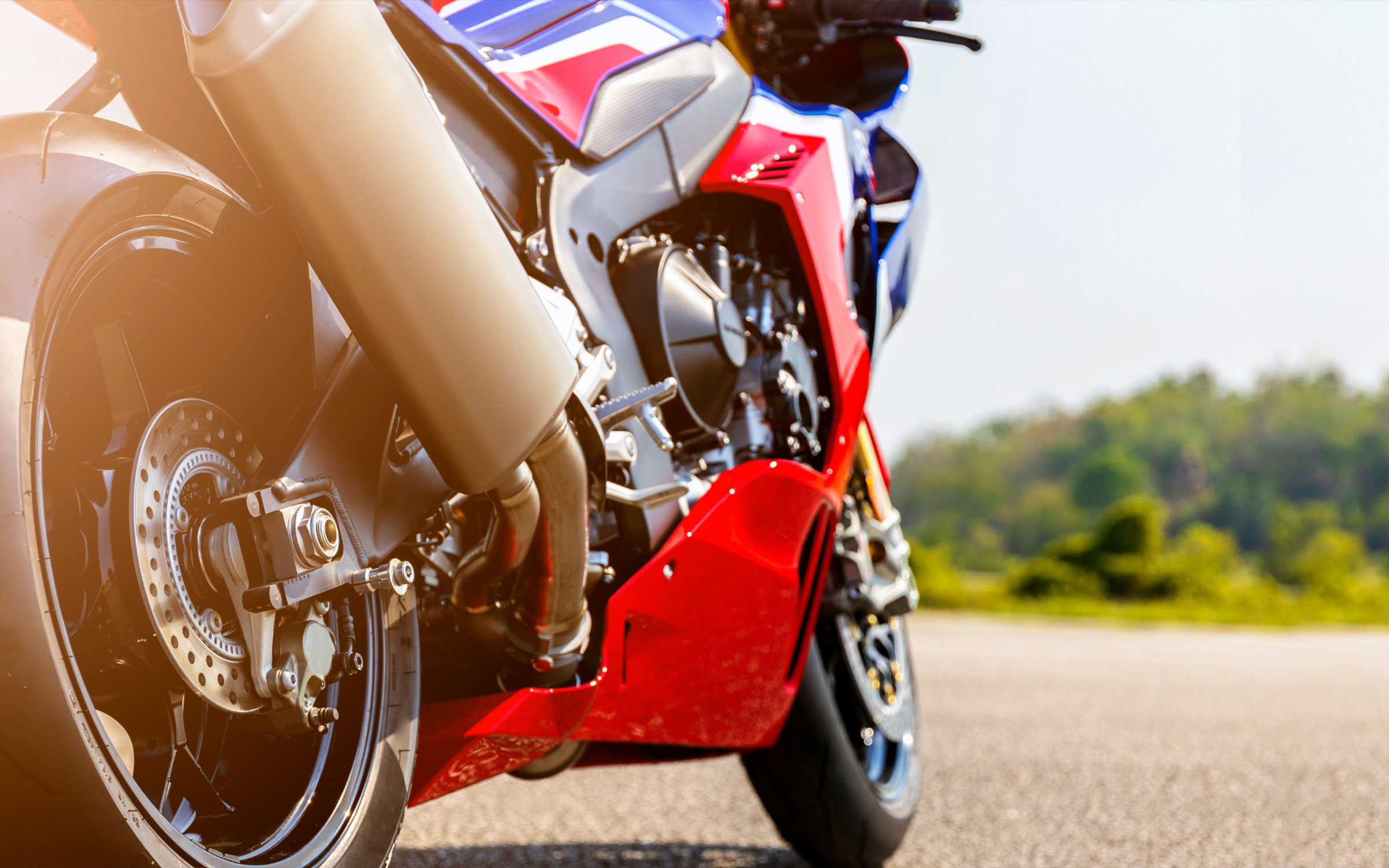
Changing motorcycle oil is one of the most critical maintenance tasks, yet also one of the most misunderstood. Many riders rely exclusively on a mileage figure, ignoring the fact that motorcycle lubricant is subjected to far greater stress compared to car engines. In a motorcycle, oil lubricates not only the engine, but also the gearbox, and it directly affects the operation of the wet clutch.
This means that the lubricant is stressed mechanically, thermally, and chemically at the same time. The true oil change moment does not depend solely on mileage, but on riding style, motorcycle type, usage conditions, and the warning signs shown by the motorcycle during everyday operation.
In this guide, we analyze when you really need to change your oil, why service intervals differ, and which signs indicate that the lubricant has reached its limits.
Why motorcycle oil wears out faster
Unlike cars, in most motorcycles the same oil lubricates both the engine and the gearbox. The gearbox gears apply intense shear stress to the lubricant, gradually “cutting” its viscosity. This means that even if the oil appears visually clean, it may have already lost part of its protective capability.
At the same time, motorcycles often operate at higher engine speeds, with abrupt changes in load and temperature. Thermal stress accelerates oil oxidation, while combustion residues and metallic particles from the gearbox increase contamination. All these factors shorten lubricant service life much faster than many riders expect.
What “oil change frequency” really means and why it is not the same for everyone
The oil change interval specified by the manufacturer is usually a theoretical value, based on ideal operating conditions. In reality, very few riders operate exclusively under ideal conditions. Urban traffic, high ambient temperatures, frequent stops, aggressive riding, or heavy load dramatically alter the rate at which oil degrades.
For example, a motorcycle used daily in city traffic, with many cold starts and low-speed operation, stresses oil more than a motorcycle primarily used for long-distance riding at steady speed. Similarly, a sport motorcycle ridden aggressively reaches temperatures and RPM levels that accelerate lubricant degradation.
For this reason, correct oil change frequency is not a fixed number, but the result of adapting service intervals to actual usage.
How motorcycle type affects when you change oil
Motorcycle type plays a decisive role. In scooters and small urban motorcycles, oil stress mainly comes from thermal cycling and frequent start-stop operation. In naked and street motorcycles, stress is generated by higher RPM and more intensive gearbox use.
In sport motorcycles, oil operates very close to its limits, both thermally and mechanically, making oil change intervals particularly critical. In cruiser and touring motorcycles, stress is more closely related to high torque and prolonged operation at stable temperatures, which also requires attention to oil aging.
Warning signs that oil needs changing (before mileage is reached)
Motorcycles often “tell” you when oil has become tired. One of the earliest signs is a change in gearbox feel. Gear shifts may become harsher, mechanical noise may increase, or smoothness during shifting may be lost.
Another characteristic sign is clutch behavior. When oil has lost part of its properties, the clutch may feel more abrupt or the lever feel may change. In some cases, higher operating temperatures or rougher engine response may also be noticed.
Changes in oil color or smell can be indicative, but they are not absolute criteria. What matters most is the combination of symptoms rather than a single isolated sign.
What happens if you delay an oil change
When oil remains in service beyond its functional life, it does not fail suddenly. It degrades gradually. Viscosity decreases, the lubricating film becomes thinner, and protection is reduced at high-stress points such as the gearbox and bearings.
Over time, this leads to increased gear wear, harsher engine operation, higher operating temperatures, and possible clutch stress. Damage is not always immediate, but cumulative, often becoming apparent much later, when repair costs are already significant.
How to define the right oil change interval for your riding
The best approach is to combine manufacturer recommendations with real-world usage. If you mainly ride in the city, ride aggressively, or operate frequently at high temperatures, oil should be changed earlier than the theoretical maximum interval.
Conversely, under gentler use with steady riding conditions, oil may retain its properties closer to the recommended interval. Monitoring motorcycle behavior and inspecting oil condition regularly is more reliable than blindly following a mileage figure.
Conclusion
Changing motorcycle oil is not merely a routine maintenance task. It is a determining factor for performance, riding feel, and long-term reliability. Motorcycle oil is subjected to greater stress, ages faster, and requires closer attention.
When you understand how and why oil degrades, you can define the correct oil change interval and prevent problems before they arise.