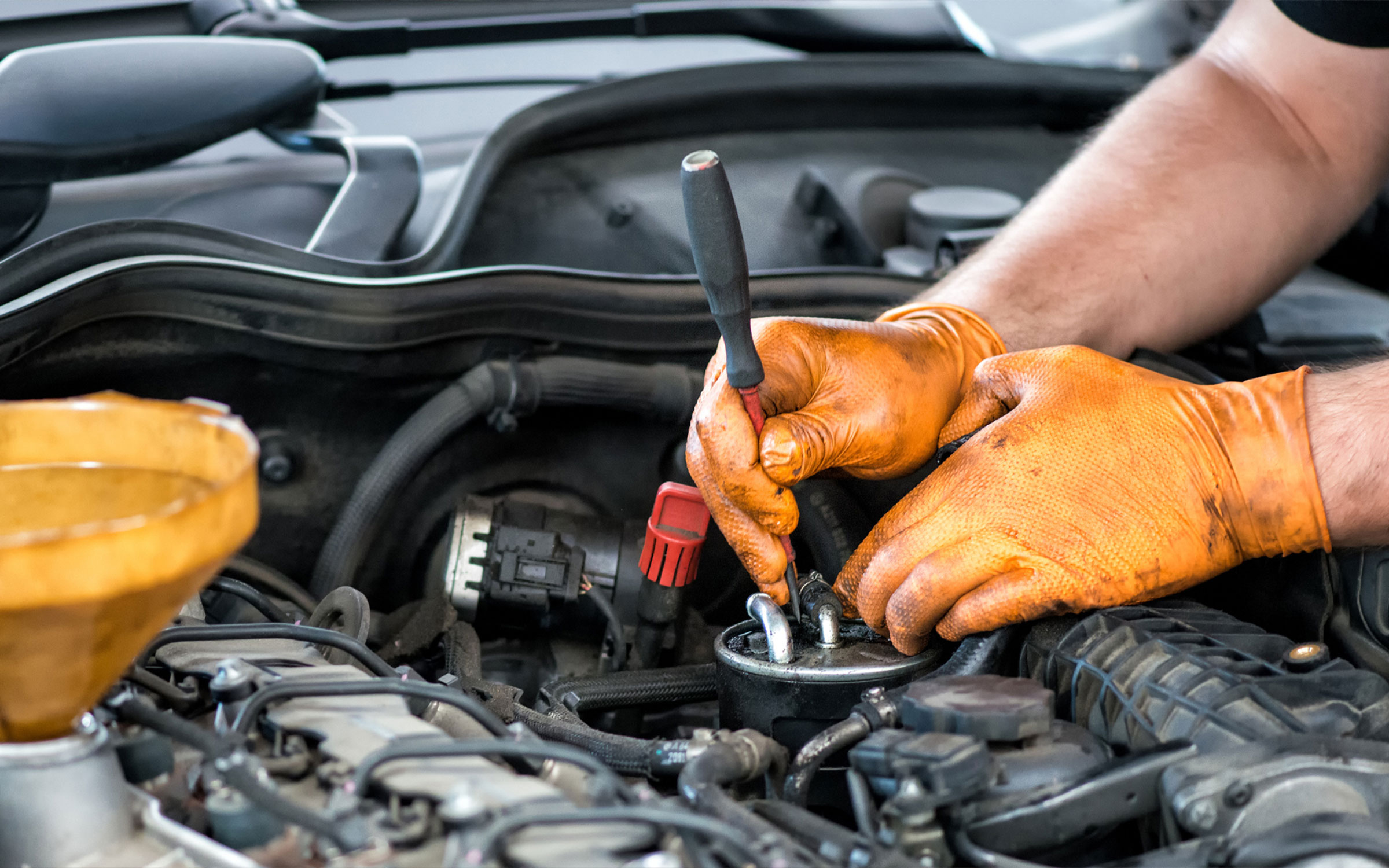
Diesel engines are designed for high torque, durability, and fuel efficiency, but these advantages come with increased maintenance requirements and greater sensitivity to improper use. Combustion through auto-ignition creates higher cylinder pressures, placing greater load on bearings, the crankshaft, and the valvetrain. At the same time, diesel combustion produces more soot and residues, which enter both the lubricant and the intake/exhaust system through EGR operation. This combination means that a “correct maintenance program” for diesel engines is not a formality, but a fundamental requirement for reliability.
Unlike gasoline engines, many diesel problems do not begin with dramatic symptoms. They usually appear as small changes that drivers may overlook: slightly increased fuel consumption, more frequent DPF regenerations, a somewhat harsher operating sound, or unstable idle. These indications often signal changes in oil chemistry (such as fuel dilution), increased soot loading (DPF), or degraded combustion quality (injectors/intake). The later the intervention, the higher the eventual cost.
The purpose of this guide is practical and technical: to help you recognize common problems early, understand the mechanisms that cause them, and apply solutions that address the root cause — not solutions that merely hide the symptom. In this way, maintenance becomes a preventive tool rather than damage control.
Clogged or malfunctioning DPF (Diesel Particulate Filter)
The DPF traps soot particles from exhaust gases and removes them through regeneration. Regeneration requires adequate exhaust gas temperature and specific operating conditions (load, time, speed). In urban driving, where operation is intermittent, temperatures are often insufficient, resulting in regenerations that start but do not complete. Each incomplete regeneration leaves additional soot in the filter, bringing it closer to restricted flow conditions.
Beyond soot, there is also inorganic ash, which originates mainly from lubricant additives. Soot can be burned; ash cannot. This means that even with proper regenerations, the DPF permanently “ages” due to ash accumulation. This is why the use of low-SAPS lubricants is technically critical: it reduces the rate of non-combustible ash accumulation and extends the service life of the filter.
Typical signs / symptoms
- More frequent regenerations or noticeable heat/odor after driving
- Reduced performance (limp mode in severe cases))
- Increased fuel consumption due to frequent regenerations
- Warning lights or fault messages (depending on vehicle)
Technically correct solutions
- Use of low-SAPS oil according to manufacturer specifications
- Incorporating “regeneration completion cycles” into regular use (steady speed/load for sufficient time)
- Avoiding extended oil change intervals in vehicles with frequent regenerations
- Diagnosing root causes (injectors, EGR, sensors) when regenerations become excessively frequent
Oil dilution with fuel and rising oil level
In active DPF regeneration, the engine may inject additional fuel to raise exhaust gas temperature. Part of this fuel may not burn completely and can wash down cylinder walls, ending up in the crankcase. The result is oil dilution, meaning reduced actual viscosity and weakened lubricating film protecting bearings, journals, and the turbocharger.
Oil dilution is particularly deceptive because it is often accompanied by a rising oil level, which drivers may interpret as a positive sign. In reality, a higher level with diluted oil means the engine is circulating a less protective lubricant, increasing wear risk under load. Additionally, diluted oil oxidizes more easily, ages faster, and forms deposits more readily.
Typical signs / symptoms
- Oil level rising instead of falling
- Fuel smell in the oil or noticeably thinner oil on the dipstick
- More frequent DPF regenerations (interrelated cause)
- Increased fuel consumption and “heavy” engine operation
Technically correct solutions
- Regular oil level checks (not only when a warning appears)
- Reducing exclusive short-trip use that interrupts regenerations
- Strict adherence to oil change intervals in DPF-equipped vehicles
- Selecting lubricants designed for DPF operation and driving conditions
Turbocharger wear: Why oil is the “weak link”
The turbocharger operates at extremely high rotational speeds and temperatures and relies entirely on a continuous supply of clean, stable lubricant. In diesel engines, where torque and load are high, the turbo frequently operates under demanding conditions, making oil quality and flow critical. When oil degrades (oxidation, soot loading, dilution) or lubrication is delayed (cold starts, incorrect viscosity), turbo bearings and shafts begin to wear.
A second critical factor is thermal stress after heavy operation. If the engine is shut down immediately after high load, oil flow stops while the turbo remains extremely hot. This increases the risk of localized oil degradation and deposit formation, which can restrict future oil flow. The issue is cumulative: small deposits gradually become a functional problem.
Typical signs / symptoms
- Loss of power, delayed boost response
- Whistling or scraping noises (in advanced wear)
- Increased oil consumption or smoke during acceleration
- Oil present in intake piping (not always a failure indicator, but requires evaluation)
Technically correct solutions
- High-quality lubricant with strong thermal and oxidative stability and correct viscosity
- Consistent oil and filter changes, especially under heavy use
- Gentle operation before shutdown after high load
- Verification of correct oil pressure/flow and clean oil passages
EGR problems and deposits: How combustion degrades
The EGR system reduces NOx emissions by recirculating exhaust gases into the intake. However, this increases soot and residue levels in the intake system, particularly when combined with low-load driving. Over time, deposits restrict airflow, alter mixture formation, and further degrade combustion, creating a vicious cycle: poorer combustion leads to more soot, which further loads the EGR and DPF systems.
The impact is not limited to emissions. Restricted intake flow can cause unstable idle, delayed response, and increased fuel consumption. At the same time, higher soot levels increase lubricant contamination, reducing protection margins.
Typical signs / symptoms
- Unstable idle, hesitation
- Reduced throttle response and increased consumption
- More frequent DPF regenerations due to higher soot production
- Fault indications (system-dependent)
Technically correct solutions
- Inspection and cleaning of EGR and intake where specified
- Lubricants with strong dispersant properties for soot management
- Periodic operation at higher load (where safe and appropriate) to limit deposit formation
- Proper diagnosis when symptoms persist (not “cleaning only” as a fix)
Injectors and fuel system: Why tight tolerances are costly
Modern diesel engines operate at extremely high injection pressures with very tight tolerances. Even small deviations in fuel delivery or spray pattern directly affect combustion quality. Poor combustion results in increased soot, higher localized thermal stress, greater DPF loading, and potential oil dilution due to incomplete combustion or failed regenerations.
The issue is not merely higher fuel consumption. A degraded injection system alters the entire operating balance: dirtier combustion, greater emission system stress, and increased oil contamination. As a result, a seemingly minor injector deviation can trigger a chain of secondary issues.
Typical signs / symptoms
- Hard starting, knocking, or rough engine noise
- Smoke during acceleration, increased fuel consumption
- Unstable idle or vibration
- More frequent DPF regenerations
Technically correct solutions
- Strict adherence to fuel filter replacement intervals
- Early diagnosis when behavior changes occur (not waiting for failure)
- Verification of system pressure and injection quality when indicated
- Combined evaluation with DPF/EGR systems (issues are rarely isolated)
Sludge and internal deposits: When oil cannot cope with the load
In diesel engines, oil is simultaneously stressed by soot contamination, oxidation (thermal/chemical aging), and possible fuel dilution. When oil change intervals are extended or when the lubricant lacks an appropriate additive package, these stresses lead to sludge formation. Sludge restricts oil flow, reduces oil-based cooling, and raises operating temperatures, accelerating further degradation.
Critically, sludge does more than affect “cleanliness.” It can restrict oil passages, reduce supply to sensitive components (such as the turbocharger), increase wear, and cause unstable oil pressure. In practical terms, oil that has lost its dispersant capacity no longer protects as intended.
Typical signs / symptoms
- Unstable oil pressure or warning indications (where available)
- Harsher operation and increased temperatures
- Brown or thick residues under filler cap or drain plug (indicative)
- Overall loss of engine smoothness and performance
Technically correct solutions
- Oil change intervals adapted to real usage, not theoretical limits
- High-quality lubricant with strong detergent/dispersant additives
- Avoiding “borderline” intervals in urban, DPF-equipped, or heavy-duty use
- Specialist inspection/cleaning when sludge history exists
Quick prevention guide: What makes the biggest difference in engine life
Prevention in diesel engines is not a single action but a system. Correct lubricant selection (especially low-SAPS where required), appropriate oil change frequency, and driving patterns that allow complete DPF regenerations form the core triad of long engine life. When one element is missing, the others struggle to compensate.
Equally important is early observation of small changes — regeneration frequency, oil level behavior, idle quality — which act as an early warning system. A diesel engine usually “speaks” before it fails, provided the operator knows what to observe beyond dashboard warning lights.
Conclusion
Diesel engine maintenance is a matter of understanding mechanical and chemical stress factors: high loads, soot contamination, thermal stress, and compatibility with DPF/EGR systems. Most failures are not inevitable but result from incorrect oil selection, extended service intervals, or unsuitable usage patterns. Correcting the system dramatically reduces failure risk.
With the correct lubricant according to specifications, oil change intervals adapted to real use, and driving habits that support proper DPF regeneration, a diesel engine can maintain high performance and reliability for many years, with significantly lower total maintenance cost.